AYURVEDA + YOU - SUMMER
Ayurveda for the Summer - Slow + Cooling
Ayurveda is considered the healing side of Yoga, and Yoga is the spiritual side of Ayurveda.
Both Ayurveda and Yoga strive to help a person re-connect to their true nature through direct experience, growing well-being in body, the mind, and the spirit.
Ayurveda ~ Ayurveda is a Sanskrit word meaning "the complete knowledge for long life" or “the science of life” and is a system of natural health care that originated in India over 5,000 years ago. It is based on a five element theory that the body and all living things are comprised of various amounts of ether, air, space, fire, water, and earth.
From these elements come 3 forces; one that governs movement, one transformation and the third structure. In the human body they are called the Doshas; Vata, Pitta and Kapha, respectively and they make up one's constitution. Ayurveda is based on the principles of these three doshas.
Knowledge of your constitution is essential in cultivating vital health & compassion. Your doshic constitution determines how you react to various foods, colors, aromas, and general life habits. Knowing the doshic constitution of your loved ones can help you understand, accept and serve them better.
Enjoy your journey here and you can reach out for any 1:1 coaching support.
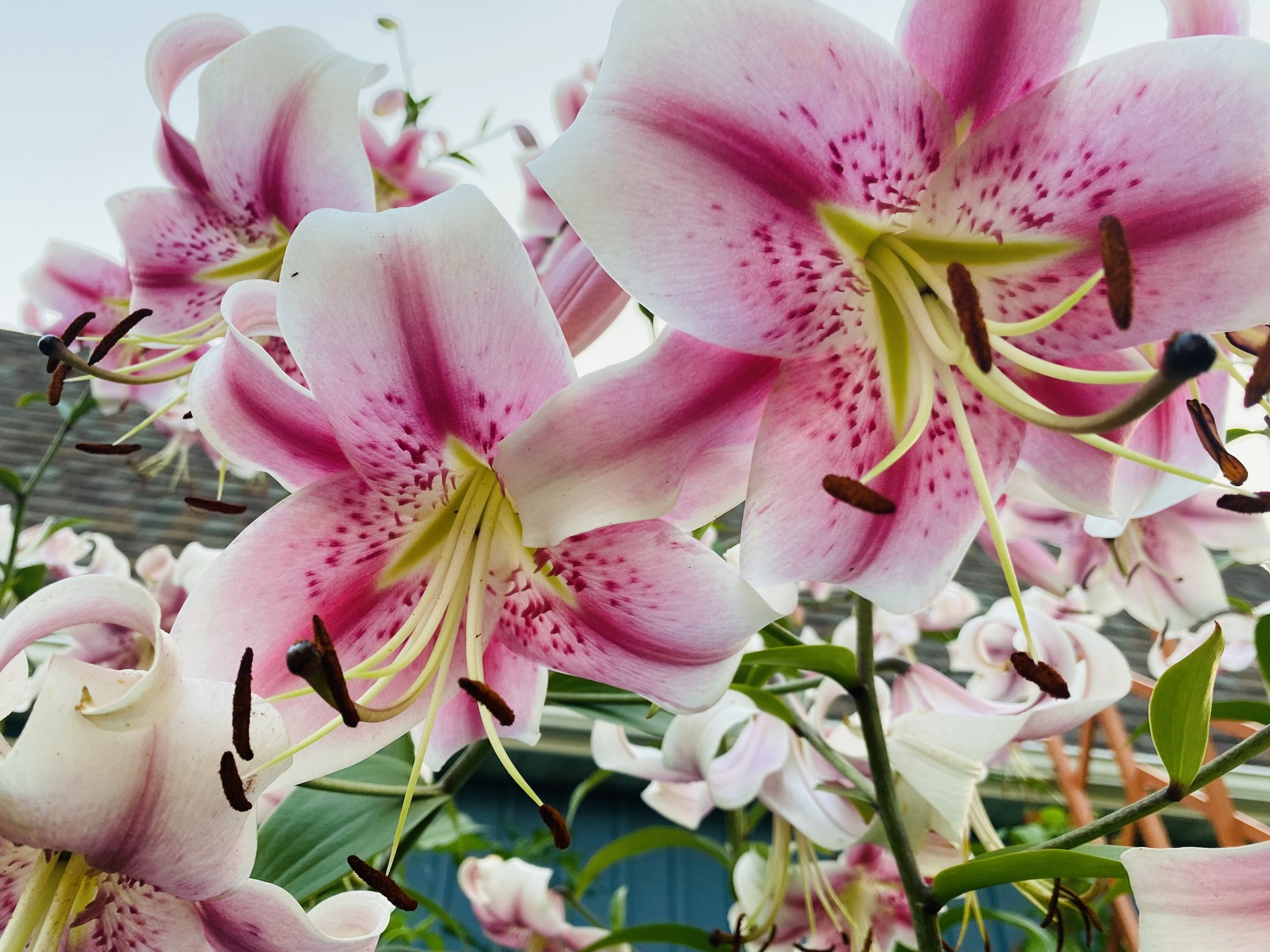
Summer is the season to slow down where and when you can + stop to smell the roses.
Daily + Seasonal Practices
Choose 2-4 of these practices,those highlighted are ideal cleansing choices that can become lifestyle choices… to start with and maintain practice for 3 weeks before adding 2-4 more, gradually working towards a daily ideal routine.
Waking with the sun – try to wake up @ the same time (ish) each day.
Tongue scrapping 1st thing in the am – daily. Such a simple and powerful action.
Sip hot H2O - 1 - 2 C of warm water w/ a squeezed wedge of lime or lemon in a.m.– daily
Drinking water – 8-12 8oz glasses of room temp water– daily
Abhyanga / Warm Oil Self Massage – 2-4/wk (see below) depending on your dosha, use more cooling oils like almond, olive or coconut. Adding rose, peppermint, fennel and/or jasmine essential oil.
Peppermint oil foot/hand rubs – like an abhyanga massage though for your feet and/or hands.
Yoga asanas– daily (this can be a 5-10 minute practice always taking at least a few minutes for savasana). Favor twists, and slowing down your practice.
Elimination – try to evacuate the bowels each morning – this can be something you work towards over time.
Pranayama (conscious breathwork) 3-5 minutes (basic 1 to 1 breath is a good place to start) work with Sheetali Breath
Drinking water – 8-12 8oz glasses of room temp water (not ice water!) – daily
Abhyanga / Warm Oil Self Massage– 2-4/wk (see below)
Meditation – 5-20 minutes – 2x/day (( so hum meditation below))
20 minute moderate walk – 4-6 days/wk
Favor using more cooling herbs & spices: fennel, turmeric, coriander, mint and rose petals.
Epsom Salt Bath – 2 C of salts, hot (as you can stand it) soak for 20 minutes, rinse off in the shower afterwards. 1-3/wk
Favor using more cooling herbs & spices: fennel, turmeric, coriander, mint and rose petals.
Eat your main meal at midday: even if you are doing this 1-3 times a week
Media Cleanse – take a ½, full day or weekend break from the internet and all screens
Move in the direction of reducing:canned, frozen, packaged or processed foods, as these are difficult to digest and contribute to toxic buildup and hea vy foods like; red meat, leftovers, fried foods, oily foods, yeasted breads, sugary desserts, alcohol, crackers, dairy products such as cheese and yogurt ….and most raw foods – as these are harder for the body to digest.
Conscious winding down before bed – come off devices (phones, computer’s tvs) at least an hour before bed. This might include gentle stretching, a warm bath, breathwork, reading something light that doesn’t stimulate your mind.
Try to get to bed by 9-10pm consistently
Abhyanga: Ayurvedic Oil Massage
Abhyanga is a full body warm oil massage. Accumulated stress and toxins in the mind and body dissolve during the daily massage. It is a powerful recharger and rejuvenator of mind and body. The Sanskrit word sneha can be translated as both “oil” and “love”. It is believed that the effects of abhyanga are similar to those received when one is saturated with love. Like the experience of being loved, abhyanga can give a deep feeling of stability and warmth. Sneha is subtle; this allows the oil/love to pass through minute channels in the body and penetrate deep layers of tissue.
How to enjoy Abhyanga: Use comfortably warm massage oil. I keep the oil is a smaller vessel and set it in a bowl of hot water for 5 minutes or so. Sesame (must be cured before using), olive, almond and coconut in the summer are common choices – use pure organic, unrefined oils. Pour a small amount of oil into your palm and apply it lightly to the entire body massaging the entire body, applying even pressure with the whole hand -- palm and fingers.
Apply light pressure on sensitive areas such as the abdomen or the heart. Use more oil and spend more time where nerve endings are concentrated, such as the soles of the feet, palms of the hands and along the base of the fingernails. Circular motions over rounded areas such as your head or joints, and straight strokes on straight areas such as your arms and legs, work best. Also give special attention to elbow, knees and other joint.
After you're done, relax for 10-15 minutes, letting the oil and the massage do their magic. The longer the oil is on, the deeper it penetrates. During this time you can read something relaxing or uplifting, rest, or get ready for the day, then follow with a relaxing warm bath or shower. If your schedule doesn't allow for a daily massage, try and squeeze it in at least 1-3 times a week. It is usually done in the morning.
You'll find it's worth it.
So Hum Meditation
1/ The yogic mantra "so hum" is not only a reflection of the sound of the breath but also carries a contemplative meaning: "I am that" (so = "I am" and hum = "that"). Here, "that" refers to all of creation, the one breathing us all.
2/ The So Hum meditation is a simple but powerful technique that uses the breath and the repetition of a mantra to quiet the mind and relax the body. This meditation will help take your awareness from a state of constriction to a state of expanded consciousness.
3/ Choose a place where you won’t be disturbed. Sit in a chair or on the floor, using blankets and pillows to make yourself as comfortable as possible.
4/ Place your palms facing up in jnana mudra (forefinger and thumb touching) with your palms facing up to open your awareness or facing down to calm the mind.
5/ Close your eyes and for a few minutes and take a few moments to observe the inflow and outflow of your breath. Scan your body and relax any tension. Let your spine rise from the ground of the pelvis. Draw your chin slightly down and let the back of your neck lengthen. Now take a slow, deep breath through your nose, while thinking or silently repeating the word So.
6/ Then slowly exhale through your nose while silently repeating the word Hum. Continue to allow your breath to flow easily, silently repeating So . . . Hum . . . with each inflow and outflow of the breath. Whenever your attention drifts to thoughts in your mind, sounds in the environment, or sensations in your body, gently return to your breath, silently repeating So . . . Hum.
7/ Whenever your attention drifts to thoughts in your mind, sounds in your environment, or sensations in your body, gently return to your breath, silently repeating, So . . . Hum.
8/ Do this process for 10 to 20 minutes. Just breathe easily and effortlessly, without trying to concentrate. When the time is up, sit with your eyes gently closed, taking a moment to rest in the stillness and silence of your meditation. Never rush to or from meditation. Just allow the peace and calm to soak into your body, and you will carry a little bit of this peace and calm with you as you move into the activities of your day.
Kitchari
eating kitchari for a day or 2 or 3 can be a gentle reset for your digestive tract. Here’s a basic recipe.
1/2 cup - Basmati Rice
1 cup - Mung Dal (split yellow)
6 cups (approx.) - Water
1/2 to 1 inch ginger Root, chopped or grated
2 – 5 tsp. - Ghee
1 - 2 tsp each: Coriander Powder, Cumin Powder, Whole Cumin Seeds, Mustard Seeds, Turmeric Powder, Fennel OR – 2-3 Tablespoon Curry Mix
1 pinch - Asafoetida (Hing) - optional
Handful - Fresh Cilantro Leaves
1 and 1/2 cups - Assorted Vegetables - sweet potato squash, zucchini, asparagus, cauliflower, etc
Mineral Salt (1/4 tsp. or so)
Kitchari means mixture, usually of two grains/pulses. This is one kitchari recipe that is particularly nourishing and easy to digest. Kitchari’s have been eaten and enjoyed for its easy digestability, nourishment and healing properties. Please note the options below for some alternatives.
Preparation ~
Carefully pick over rice and dal to remove any stones. Rinse and rinse again…
Wash each separately in at least 2 - 3 changes of water.
Add the @ 6 cups of water to the rice and dal and cook covered until it becomes soft, about 20 – 40 minutes.
While that is cooking, prepare any vegetables that suit your constitution.
Cut them into smallish pieces. Add the vegetables to the cooked rice and dal mixture and cook 10 minutes longer until well cooked.
In a separate saucepan, sauté the seeds in the ghee until they pop.
Then add the other spices. Stir together to release the flavors.
Stir the sautéed spices into the cooked dal, rice, and vegetable mixture.
Add the mineral salt and chopped fresh cilantro and serve.
Add brags, a touch more ghee, toasted pumkin seeds, etc to taste. Enjoy!!